
Seth Beamer: “Independence gives artists a lot of control”
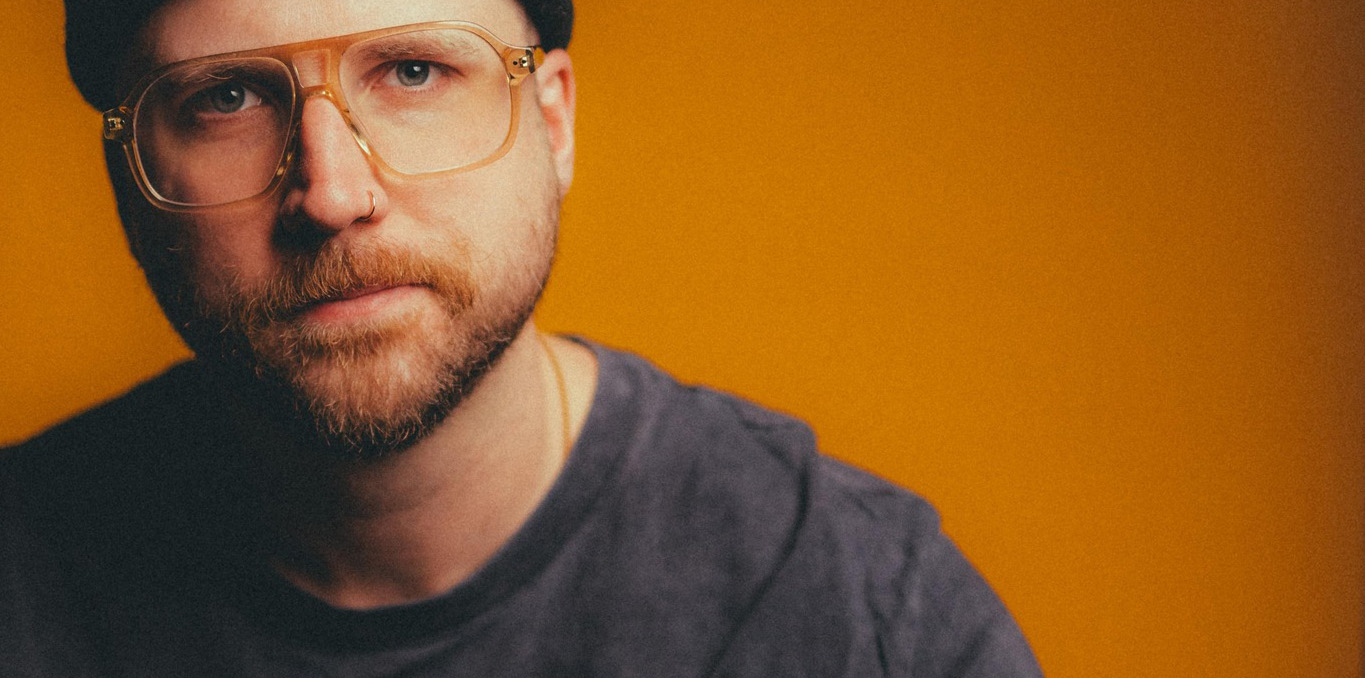
While some artists chase fame, high streaming numbers, or spots at major festivals, others focus on staying true to their work. Seth Beamer, however, has managed to do both.
“Music has always been the through-line in my life,” Beamer told Raw Critters.
The Denver singer‑songwriter has relocated to Nashville, the world’s music capital where songwriting is almost a religion. There, he’s found the ideal ecosystem, one that lets him develop his solo project while staying deeply connected to the community of musicians he collaborates with both onstage and off.
“Being in bands teaches you how to listen,” he explained.
Although Seth Beamer has been part of several bands, in 2022 he launched his solo career. And that means everything that comes with it: writing on his own, taking on all the spotlight, and navigating the quirks of a highly competitive music industry that devours artists at the same time technology gives them every tool to survive.
“Independence gives artists a lot of control,” Beamer remarked.
His music can be heard on Spotify, radio stations, and sync placements with MTV, QuickBooks, Colorado Tourism, and Sesame Street. On his debut album You Can’t Change Me, which features his breakout hit The Runaround, you’ll also find other standout tracks like Picture Perfect and Ready To Go, the three opening the record before giving way to more introspective songs such as Devil On My Shoulder or one of my personal favorites, apart of the one that gives name to the album, The Silence.
Beamer’s work shows how “intentionality”, a principle that seems to define his career, coexists with the consistency in how he writes both music and lyrics, coming together in a result that resonates with everyone. Not because it follows a trend, but because the songs are well-crafted, reveal his sensitivity, and simply sound great.
The album was produced by Chris Beeble (Descendents, Rise Against, Alkaline Trio, Radkey) and Randall Kent at The Blasting Room (Colorado), where Jason Livermore (Descendents, Rise Against) handled the mastering.
Seth Beamer also spoke with us about his work as a producer and filmmaker, offering his take on the current landscape of music videos. The singer‑songwriter explained that the music videos, that once held all the spotlight, are now giving way to new formats driven by streaming platforms and social media.
“The ‘one big video per album’ model doesn’t always make sense anymore,” he said. “The key is intention,” he added. “The ones that survive are the ones that add meaning, not just content.”
At the same time, mobile‑first content consumption is reshaping the way musicians present themselves, he commented.
“…Such a picture, perfect moment…” as his song says.
Question. Tell us a little about how you first got into music and how you shaped your project as Seth Beamer.
Answer. Music has always been the through-line in my life. I started playing guitar at a young age, got obsessed with writing songs, and pretty quickly realized I didn’t just want to perform – I wanted to understand how songs worked and how they made people feel.
The Seth Beamer project came later, after years of playing in bands and collaborating with other artists. It’s where everything finally converged: my love of melody, big emotional moments, and honest storytelling. This project feels like the most distilled version of me – less about fitting into a scene, more about making music that reflects where I’m actually at in life.
Q. Why did you move from Denver to Nashville, and not to New Orleans or New York? Is Nashville really that important for musicians, or did your work as a producer and filmmaker also play a role in the decision?
A. Denver gave me so much, and I’ll always be grateful for that chapter. But Nashville felt like the right next step. It’s one of the few places where songwriting is truly the center of gravity, and that matters to me more than anything.
The move wasn’t just about music, though. My work as a filmmaker and producer definitely played a role. Nashville sits at a really interesting intersection of music, media, and creative entrepreneurship. There’s a culture of collaboration here that feels very natural to me – it’s a place where people actually make things, not just talk about them.
Q. Before focusing on your solo career, you were part of Wildermiss and Red Fox Run, and you also collaborated with many artists. How much of them is present in Seth Beamer’s music, and what other influences or references do you have?
A. Those years shaped me in a huge way. Being in bands teaches you how to listen, how to serve a song, and how to leave space for other voices. All of that still shows up in my music, even if the project is now my name on the cover.
I’m influenced by artists who balance emotion and accessibility – bands from the early 2000s that knew how to write big, anthemic songs without losing sincerity. There’s also a strong pull toward nostalgia, not in a retro way, but in capturing fleeting moments and feelings before they disappear.
Q. Tell us about your album You Can’t Change Me. When did you write it, and what was the process of bringing it to life?
A. You Can’t Change Me was written over a few transitional years – emotionally and geographically. A lot of the songs came from moments of trying to hold onto who I was while everything around me was shifting.
The process was slow and intentional. Some songs lived as demos for a long time before they became what they are now. I wanted the record to feel honest, not over-polished, but still powerful. It’s a snapshot of a specific season of my life, and I think that’s why it resonates with people.
Q. Are you aiming to be part of a record label, or do you think labels are no longer necessary today?
A. I don’t think labels are obsolete, but I do think their role has changed. For me, it’s less about needing a label and more about finding the right partners.
Independence gives artists a lot of control, but collaboration and support still matter. If a label understands the vision and actually helps amplify it, that can be powerful. If not, there are more tools than ever to build something sustainable on your own.
Q. How have you experienced the impact of having your music played on radio and television? Is it something artists should actively pursue?
A. Hearing your music on radio or in a TV show never stops being surreal. It’s validating in a quiet way – it means the song connected with someone enough to live beyond you.
That said, it’s not something you can fully control. Artists should absolutely put themselves in a position to be discoverable, but there’s also a bit of luck involved. The best approach is to focus on making great work and building real relationships, rather than chasing placements alone.
Q. As a solo artist, what are your concerts like? Beyond the acoustic format, is it easy to get support from other musicians to join you on stage?
A. My shows can live in a few different worlds. Sometimes it’s just me, stripped down and intimate. Other times it’s a full band with tracks and bigger dynamics. I like having that flexibility – it keeps things honest and adaptable to the room.
I’ve been lucky to build a community of musicians who are generous with their time and talent. Collaboration has always been a big part of my life, and that carries over onto the stage whenever possible.
Q. How are music videos evolving in a singles-driven market, and how does the music video itself survive?
A. Music videos aren’t disappearing – they’re just evolving. The “one big video per album” model doesn’t always make sense anymore, but visuals are still essential to how people connect with music.
We’re seeing more creative, modular approaches: visualizers, short-form content, performance clips, narrative fragments. The key is intention. A music video doesn’t have to be expensive, but it does have to feel considered. The ones that survive are the ones that add meaning, not just content.
Q. What do you think about vertical formats and how artists approach photography today?
A. Vertical formats are a reality now, whether we like it or not. They’ve changed how artists think about imagery, sometimes at the expense of longevity. A photo that works great on Instagram might not translate elsewhere.
What artists are really asking for – whether they realize it or not – is flexibility. They want images that live across platforms without losing their identity. As both an artist and a photographer, I try to think in systems rather than single assets: creating visuals that feel intentional in any format, not trapped by trends.
Seth Beamer: Web | Spotify | Bandcamp | Instagram | Facebook


